
 By
By 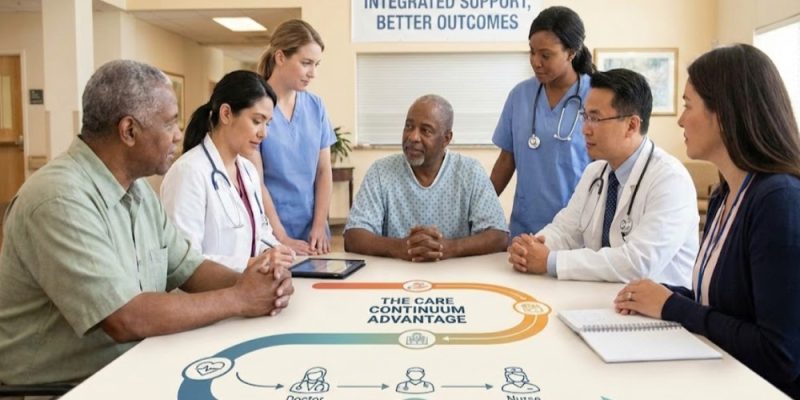
Addiction recovery is most accurately understood as a continuum of care rather than a single intervention. The continuum spans stabilization, residential treatment, outpatient care, and long-term aftercare, with each phase building on the previous one. No single phase, however well executed, substitutes for the complete sequence.
Outcomes research consistently shows that patients who progress through a complete continuum achieve better long-term results than those who receive a single phase of care in isolation. The completeness of the continuum predicts success more reliably than the intensity of any single phase.
What Each Phase of the Continuum Contributes
Each phase addresses a distinct clinical need: stabilization manages physical dependence, residential care addresses psychological drivers, and aftercare sustains the gains. Skipping or truncating any phase weakens the structure that supports sustained recovery. The phases are designed to reinforce one another rather than to function independently.
The residential phase, where patients engage in intensive individual and group therapy, is often the core of the continuum, and selecting a residential addiction treatment in Los Angeles program that integrates with both earlier and later phases protects the continuity that recovery depends on. A residential program disconnected from the phases around it loses much of its clinical value.
How the Stabilization Phase Sets the Trajectory
The continuum begins with stabilization, and the quality of this first phase influences everything that follows. A poorly managed withdrawal phase can derail a patient before therapeutic work even begins. Conversely, a well-managed entry point creates momentum that carries into the later phases.
Beginning the continuum with a properly managed drug and alcohol detox in Los Angeles establishes the physical stability that the rest of the continuum requires. Patients who skip medical stabilization or attempt it without supervision frequently never reach the later phases where lasting change occurs.
Why Aftercare Completes the Structure
Aftercare, including outpatient therapy and peer support, sustains the gains made during residential treatment. The transition back to daily life is where many recoveries are tested, and structured aftercare provides the support that makes the transition survivable. Recovery does not end at discharge; it enters a new and equally important phase.
What Happens When the Continuum Is Interrupted
When the continuum is interrupted, patients lose the cumulative benefit of connected care and face elevated relapse risk at the break point. Interruptions most commonly occur at transitions, which is why deliberate planning across phases is essential to maintaining the structure.
The continuum of care, not any single phase, is what determines long-term recovery success. Programs and patients who treat recovery as a complete sequence rather than a one-time intervention achieve measurably better outcomes.







Comments