
 By
By 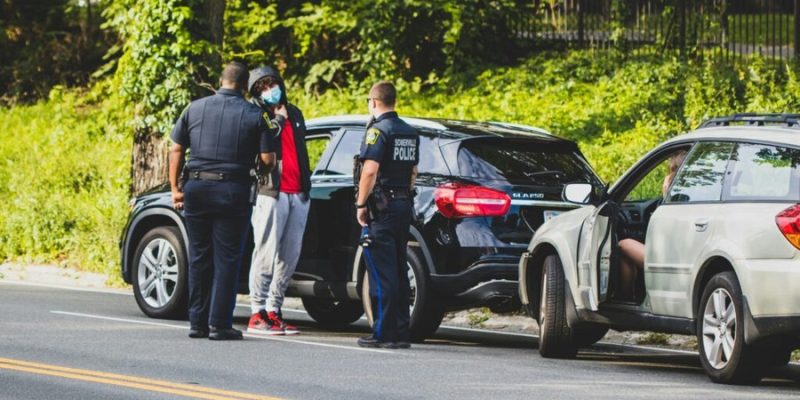
Police reports serve as foundational documents in personal injury claims, influencing insurance adjuster decisions, litigation strategy, and ultimately settlement values. However, police report accuracy varies significantly depending on officer training, scene complexity, the number of witnesses interviewed, and the time elapsed between the incident and report completion. Analyzing the relationship between report accuracy and case outcomes reveals how errors in these documents affect the financial resolution of personal injury claims.
Error Rates in Police Accident Reports
A study examining 2,500 police accident reports (Transportation Research Record) against independently gathered evidence and found factual errors in 26% of reports reviewed. The most common error categories included incorrect diagram placement of vehicles at the point of impact, misidentified traffic signal status, inaccurate speed estimates, and incomplete witness identification. In 8% of cases, the report assigned fault to the wrong party based on the independently verified evidence.
Error rates increase with collision complexity. Two-vehicle collisions produced error rates of 19%, while multi-vehicle collisions had error rates of 38%. Collisions at intersections where signal timing or right-of-way was disputed showed the highest error rates, exceeding 40% in some subsets. These figures demonstrate that police reports, while important, are not infallible records of what occurred (Avian Law Group).
Impact on Insurance Claim Processing
Insurance adjusters treat police reports as primary evidence during initial claim evaluation (Claims and Litigation Management Alliance). When the police report assigns fault clearly to one party, the at-fault party’s insurer accepts liability in approximately 85% of cases without additional investigation. When the report is ambiguous or contains errors that misallocate fault, the claim enters a disputed status that delays resolution and typically reduces settlement values.
Claims where the police report contradicts the claimant’s account of the accident settle for an average of 34% less than claims where the report supports the claimant’s version. This disparity exists even in cases where subsequent evidence, such as surveillance footage or witness statements, ultimately supports the claimant. The initial framing established by the police report creates an evidentiary anchor that influences the entire negotiation process.
Challenging Inaccurate Reports
Most jurisdictions allow supplemental statements or formal challenges to police accident reports, though the process varies. In California, a party to an accident can submit a written statement to the reporting agency requesting amendment of factual errors. However, officers are not required to amend reports based on party statements alone. Independent evidence, such as dashcam footage, electronic data recorder information, or third-party witness testimony, significantly strengthens amendment requests.
In litigation, police reports are generally admissible as business records, but the conclusions and fault determinations within them can be challenged through expert testimony. Accident reconstruction experts can demonstrate through physical evidence analysis (Accreditation Commission for Traffic Accident Reconstruction) that the report’s conclusions are inconsistent with the available data. Successfully challenging a police report that erroneously assigns fault can shift case value by hundreds of thousands of dollars in serious injury claims.
Proactive Documentation Strategies
Given the documented error rates in police reports, individuals involved in accidents should independently document scene conditions, gather witness contact information, and photograph vehicle positions before they are moved. This independent evidence provides a baseline against which the police report can be evaluated and, if necessary, challenged. The data shows that report errors are common enough to warrant proactive protection of the factual record.











Comments